Artistic Statement for the Carpet “The Salute Line”
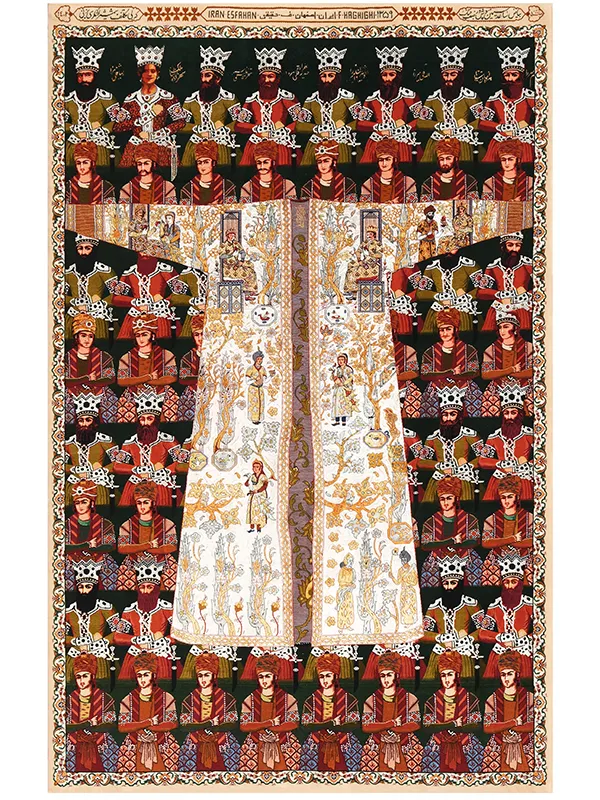
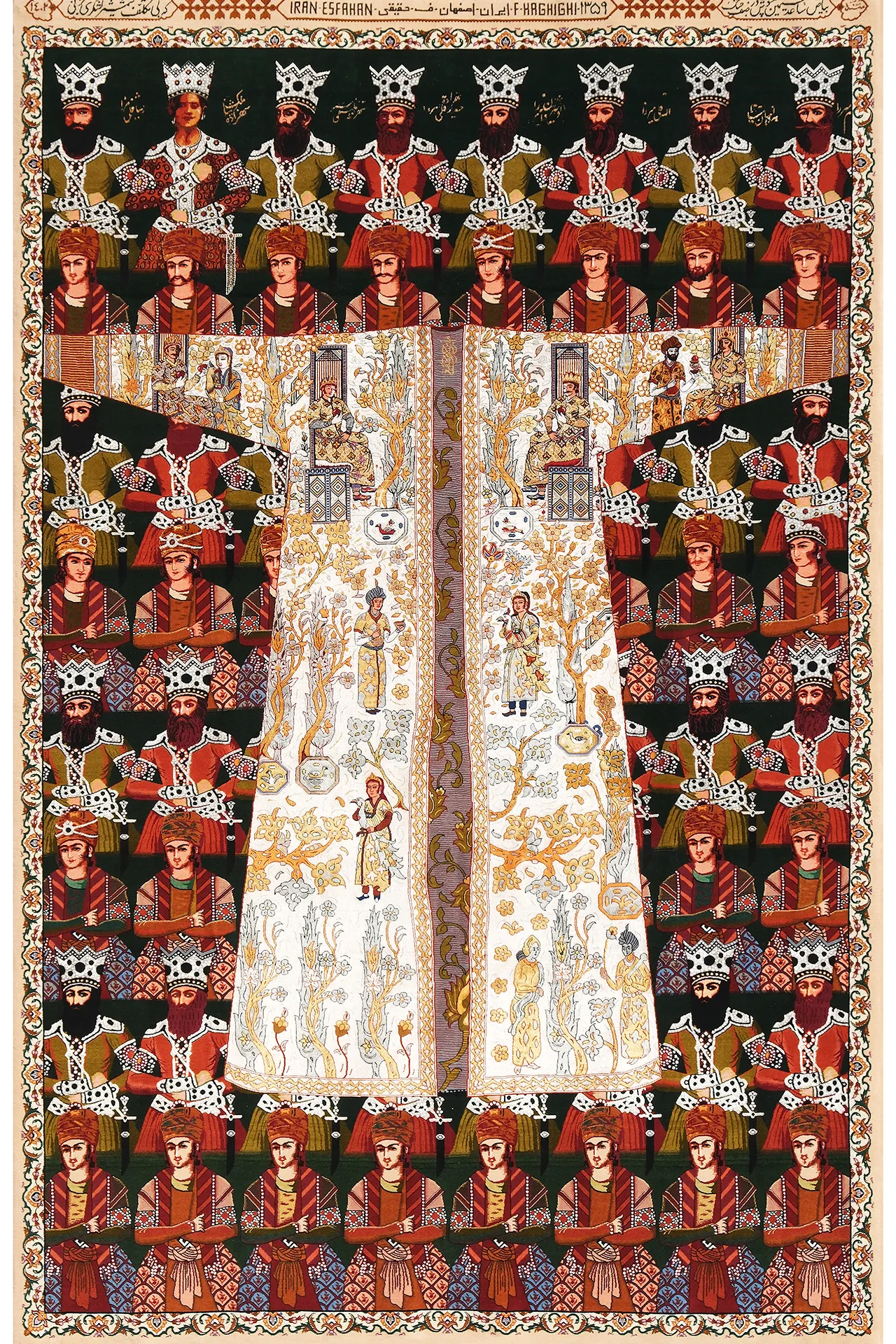
The carpet “The Salute Line” is inspired by the famous Qajar-era painting “Fath-Ali Shah’s Salute Line,” housed in the Negarestan Garden Museum at the University of Tehran. Featuring repeated figures of historical Qajar men and women standing side by side in a ceremonial line, the carpet reflects a moment of grandeur and glory from Iran’s rich history.
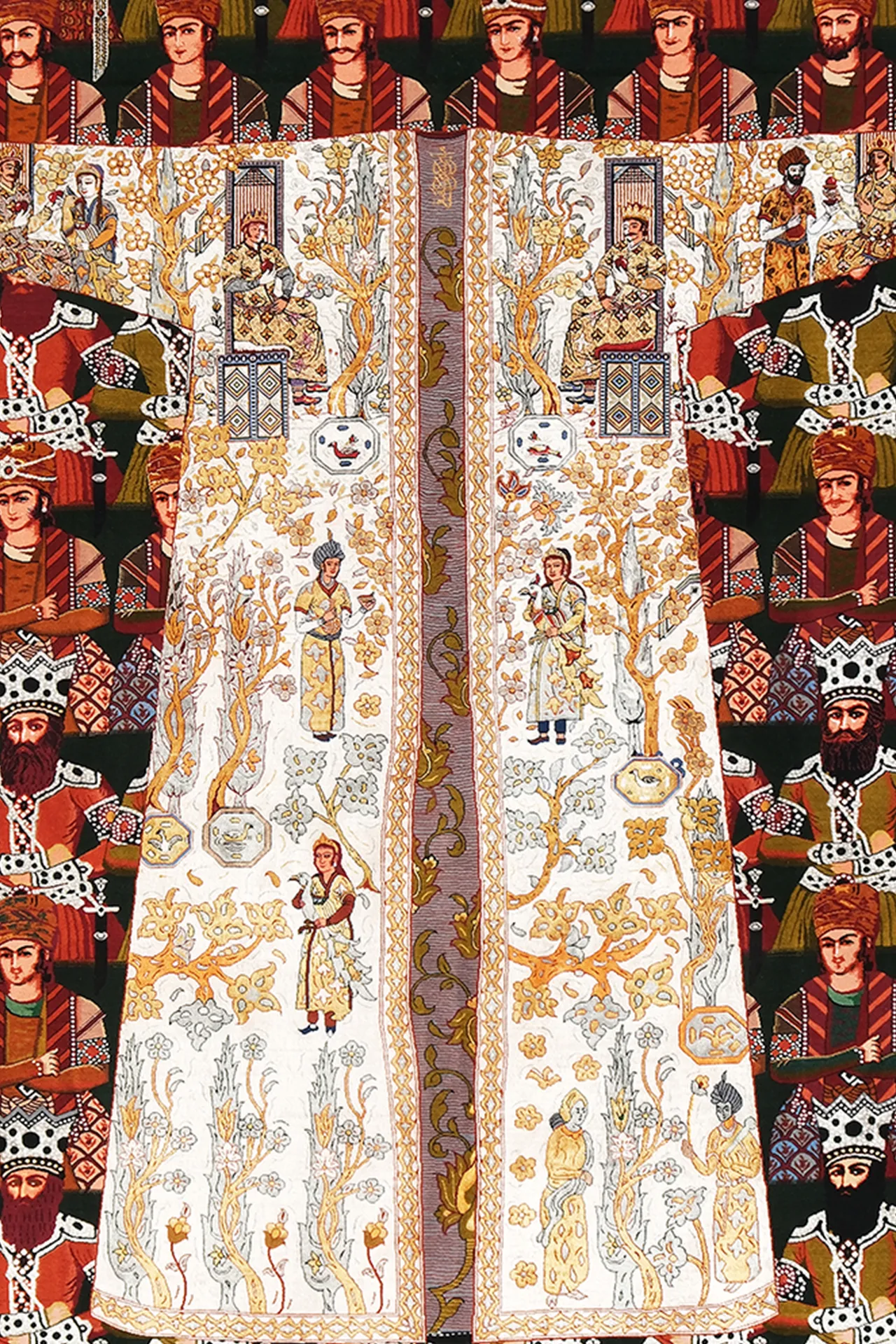
What makes this carpet truly unique is the large cloak that drapes over all these figures. This cloak is not merely a garment—it serves as a powerful metaphor for collective strength and the ideals of the Iranian people. With its open arms, the cloak delivers a message: the robe of power and splendor never belongs to just one person. It is intentionally depicted as oversized and headless, to symbolize that power is temporary and ever-changing. Anyone may stand in line to wear the cloak at some point in history—but no one remains in that position forever.
“The Salute Line” is not only an artistic tribute to Iranian history and culture; it also holds a deeper commentary on the nature of political and social transformation. Fittingly, the carpet has been honored by being displayed alongside the original Fath-Ali Shah painting, in the Negatestan Miseum Garden in Tehran, that also houses works by masters of Iranian art and literature, including Monir Farmanfarmaian and Kamal-ol-Molk.